


Ayurveda Health Coach
For all those who want to understand Ayurveda in its depth: Comprehensive training with 4 modules and a certificate as Ayurveda Health Coach.





Why warm dishes not only heat us up in the cold season, but also relieve our metabolism and strengthen our immune system.
According to Ayurveda, our bodily fluids (doshas) change with the temperature depending on the season. If the thermometer drops, Vata (cold and dry) rises sharply in the first half of winter, from the end of October to the end of December. Now is the time to keep warm in order to strengthen the immune system and ward off viruses and germs. On the outside, the onion look is recommended: Several layers with a thin air cushion in between ensure a comfortable body temperature.
Ayurvedic nutrition also helps to provide warmth from within by fanning the digestive fire (agni). Everyone knows from their own experience that warm meals and hot drinks are better for this than cold cuts and cheese from the fridge and a cold lemonade. In order to be able to utilize food, it has to be broken down and converted by our body. Cooking makes this process easier. Hot food relieves the body of work that it would otherwise have to do itself. It is a kind of energy-saving model: warm food provides nutrients in an easily digestible form and costs less energy. This energy is then available for other important tasks such as concentration, performance and defense. This makes it easier for us to resist colds.
"The body is the house of our soul", says Ayurveda. And just as we heat the house in the morning with a heater or fireplace, we should also heat ourselves up - preferably right at breakfast. A warm cereal porridge is much less stressful than a classic Western breakfast with bread, ham, cheese and an egg. This is basically too heavy and paralyzes the power of Agni. In the morning, Agni, the digestive fire, is not yet very active. Breakfast should therefore be easy to digest.
The best way to start the day is with a glass of warm water, in winter with a piece of fresh ginger, which also warms you up and boosts your metabolism and immune system. At the same time, the fluids lost during the night are replenished and the stomach is prepared for food intake. This is followed by a warm cereal porridge with cereal flakes of your choice, water, milk or milk alternatives such as soy, almond or rice milk and spices, supplemented with seeds, kernels, nuts or dried fruit. Fruit is best added in steamed form as it is easier to digest. From an Ayurvedic point of view, dairy products and sour fruit do not go so well together. The classic Ayurvedic breakfast porridge consists of a cup of (cereal) flakes, which are fried in a pan with a little ghee or coconut oil. Then deglaze with water, milk or milk alternatives, simmer for a few minutes and refine with spices, nuts and/or seeds. Spices such as vanilla, turmeric, ginger, fennel, caraway, coriander, cinnamon and cardamom enhance the warming effect. Garnish with stewed or roasted seasonal fruit to taste.
Ayurvedic nutrition generally recommends eating regularly, as the body adapts better to meals that are eaten at the same time and is also better able to digest them. It is best to have a not too rich breakfast in the morning, the main meal at lunchtime and another light meal in the evening. From an Ayurvedic point of view, snacks should be avoided as they put a strain on the biorhythm. It is particularly important to ensure that the food is of good quality and not to eat too little or too lightly in winter. Otherwise we run the risk of burning through our energy reserves due to our active metabolism. To avoid this, we can eat somewhat heavier foods. Soups and stews have a long tradition in Western latitudes, especially during the cold season. They are also a good choice from an Ayurvedic point of view, both for lunch and dinner. Pureed vegetable soups and broths relieve the body and provide all the important nutrients. Carrots, beet and pumpkin are particularly recommended. They provide us with antioxidants, fibre and minerals and - refined with ginger, turmeric, pepper, mustard or cinnamon - stimulate digestion. Good old chicken soup also provides valuable protein and is now a good addition to the menu.
In addition to carrots and beet, the preferred vegetables include eggplants, cabbage, pulses and root vegetables, and potatoes and rice in moderation. Even though the Ayurvedic cuisine practiced in India today is based on a vegetarian diet, Kerstin Rosenberg recommends freshwater fish and chicken from time to time for non-vegetarians. In the second half of winter (January-February), the body builds up Kapha to protect itself from the cold and emaciation. This also strengthens the immune system. It is supported by oily foods, preferably sesame oil, linseed oil and mustard oil. Cold foods and drinks, dry foods and reducing cures should be avoided during this period. Fortifying foods such as milk, ghee, nuts and dried fruit are particularly recommended. For internal warmth and circulation and metabolic activity, it is advisable to drink plenty of warm, boiled water. And good news for all red wine lovers: one or two glasses of wine are permitted or expressly recommended during this period of the year.
Kerstin Rosenberg is a well-known Ayurveda specialist and successful book author who trains Ayurveda therapists, nutritionists and psychological counselors in Germany, Austria and Switzerland. Together with her husband, she is managing partner of the European Academy for Ayurveda, an internationally award-winning Ayurveda institution with its own Ayurveda training and spa center in Birstein, Hesse. As Chairwoman of the VEAT - Association of European Ayurveda Doctors and Therapists, Kerstin Rosenberg represents the professional and educational interests of Ayurveda doctors, practitioners and therapists in public and international professional bodies.
What can you do for yourself and your health with Ayurvedic nutrition?
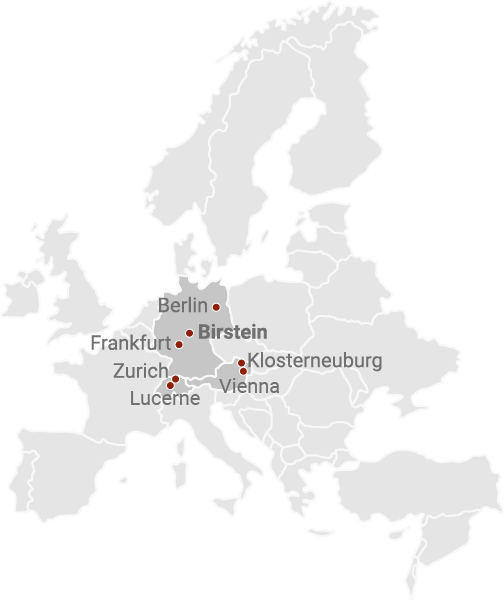
With these seminars at the European Academy of Ayurveda you will find an easy start. As a live webinar, as an eLearning course for self-learning or practically on site in Birstein, Zurich or Vienna.
Learn how to eat according to your type and which spices and herbs support you optimally.
Das Original mit Buchautorin Kerstin Rosenberg.
Finde die Ernährung, die wirklich zu Dir passt!
Welche Wirkung haben Kurkuma, Kümmel & Co.? In diesem Seminar entdeckst du dein Gewürzregal als Hausapotheke.
For all those who want to understand Ayurveda in its depth: Comprehensive training with 4 modules and a certificate as Ayurveda Health Coach.

These cookies are absolutely necessary for the basic functioning of the website, for example navigation, shopping cart, display in your internet browser or consent to cookies. Without them, you will not be able to use the site as intended.
| Name | Shopping cart |
| Note | These cookies are set when you add a seminar to your shopping cart. |
| Processing company | Rosenberg gGmbH |
| Purpose | Used to book seminars on the website. |
| Privacy policy | https://ayurveda-akademie.org/nl/service/privacy-policy |
| Host[s] | ayurveda-akademie.org |
| Cookie name | cookie_seminare |
| Maximum cookie duration | 1 day |
| Name | Cookie und Banner Service |
| Purpose | Stores your cookie and banner settings for this website in the browser's local storage. |
| Processing company | Rosenberg gGmbH |
| Privacy policy | https://ayurveda-akademie.org/nl/service/privacy-policy |
| Host[s] | ayurveda-akademie.org |
| Cookie name | _ayurveda_cookie_settings_, _ayurveda_banner_popup_[id]_[num] |
| Maximum cookie duration | 78 years |
| Name | Vimeo Video |
| Purpose | This cookie is used to distinguish between humans and bots. |
| Processing company | Vimeo |
| Privacy policy | https://vimeo.com/privacy |
| Host[s] | player.vimeo.com |
| Cookie name | __cf_bm |
| Maximum cookie duration | 1 year |
Our website requires these cookies to anonymously store information about your settings, for example which language you have selected. They are also needed to enable certain functions such as playing videos. The functional cookies are set by us or by third-party providers whose services we use for our site.
| Name | YouTube |
| Note | We integrate YouTube in the so-called "extended data protection mode". Cookies are only set when you play a video. |
| Processing company | GoogleLLC |
| Purpose | Used to play videos on the website. |
| Privacy policy | https://policies.google.com/privacy |
| Host[s] | .google.com |
| Cookie name | CONSENT, PREF, VISITOR_INFO1_LIVE, YSC |
| Maximum cookie duration | 17 years |
| Name | Vimeo |
| Note | Vimeo only sets cookies when you play a video. |
| Processing company | Vimeo. Inc. |
| Purpose | Used to play videos on the website. |
| Privacy policy | https://vimeo.com/privacy |
| Host[s] | .vimeo.com |
| Cookie name | player, vuid |
| Maximum cookie duration | 11 years |
| Name | Google Maps |
| Note | Cookies are only set when you activate the route planner. |
| Processing company | Google LLC |
| Purpose | Used to display Google Maps content. |
| Privacy policy | https://policies.google.com/privacy |
| Host[s] | .google.com |
| Cookie name | 1P_JAR, CONSENT, NID |
| Maximum cookie duration | 17 years |
The analysis cookies help us to understand how and how often visitors use our website. To do this, they anonymously record the data of your visit, for example, which seminars and training courses you have viewed, and evaluate this information statistically.
| Name | Google Tag Manager |
| Processing company | Google LLC |
| Purpose | Used to manage JavaScript and HTML code snippets. These can be used to implement tracking, analytics, personalisation and marketing performance tags and tools. |
| Privacy policy | https://policies.google.com/privacy |
| Host[s] | .google.com |
| Cookie name | ga,_gat,_gid |
| Maximum cookie duration | 2 years |
| Name | Analytics |
| Processing company | Google LLC |
| Purpose | Used for website analysis, collects statistical data about how visitors use our website. |
| Privacy policy | https://policies.google.com/privacy |
| Host[s] | .google.com |
| Cookie name | _ga,_gat,_gid |
| Maximum cookie duration | 2 years |
Marketing cookies are used by third parties to display advertising offers that are particularly relevant to your interests.
We do not currently use marketing cookies on our website.
We share with you the latest news and articles from the world of Ayurveda as well as recipes from the Birsteiner organic Ayurveda cuisine and of course information about our educational offerings.
We send out our newsletter about every 1-2 months, depending on developments in the academy and news in Ayurveda.
We send the newsletter via MailChimp, which also stores the email addresses and information for newsletter analysis.
In our privacy policy you will find detailed information about the dispatch and the statistics of the newsletter.
In order for our newsletter to become better and better, you agree to our evaluation, with which we measure the opening rates and clicks.
With your registration for our newsletter you will receive a confirmation email, which you must activate to receive the newsletter. Each individual newsletter contains an unsubscribe link, with which you can unsubscribe with one click.